PRATIBHA
Project Pratibha was initiated in response to the growing importance of digital skills in today’s rapidly evolving world. Students in government schools, many from economically vulnerable communities, often begin at a disadvantage due to limited access to technology and digital exposure, making it difficult to keep pace in an increasingly technology-driven society. This disparity is particularly pronounced in urban Hyderabad, one of India’s leading IT hubs, where digital literacy is essential for future employment.
Building on Kriti’s long-standing engagement with government schools, Project Pratibha seeks to bridge this gap by strengthening structured computer education at the high school level. Many government schools lack dedicated computer labs, adequate equipment, trained teachers, or a combination of these. The program addresses these systemic gaps by supporting infrastructure, curriculum delivery, and academic integration. Kriti works closely with school administrations to embed computer classes into the regular timetable, in line with education department mandates. Currently implemented in 12 government high schools, the program ensures that students in Classes 6 to 10 receive at least two computer classes per week (with Grade 10 schedules adjusted around board examinations).
Schools Covered (2025-26)>
- NBT Government High School (English and Telugu Medium), Road No. 12, Banjara Hills Students impacted: 571
- Shaikpet Government High School (English and Telugu Medium), Shaikpet–Manikonda Puppalguda Road Students impacted: 410
- Chourajinsi Government High School (English and Urdu Medium), Film Nagar, Banjara Hills Students impacted: 339
- Mustaidpura Government High School (English and Telugu Medium), Karwan Students impacted: 325
- Roundtable High School (English and Telugu Medium), Film Nagar, Banjara Hills Students impacted: 880
- Natco Government High School (English, Telugu, and Urdu Medium), Borabanda Students impacted: 987
- Lalapet Boys Government High School (English and Telugu Medium), Lalapet, Secunderabad Students impacted: 301
- Lalapet Girls Government High School (English and Telugu Medium), Lalapet, Secunderabad Students impacted: 262
- ZPHS Suraram (English and Telugu Medium), Madchal Students impacted: 423
- KGBV Kismathpur (English and Telugu Medium), Kismathpura Students impacted: 265
- Sriram Nagar Government High School (English and Telugu Medium), Sriram Nagar Students impacted: 426
- Jangammet Government High School (English, Telugu, and Urdu Medium), Jangammet Students impacted: 388
Curriculum & Pedagogy
A graded, age-appropriate curriculum has been developed and is delivered across all participating schools. The curriculum includes:
- Computer Basics
- Microsoft Word, Excel, and PowerPoint
- Logic and Flowcharts
- Scratch
- Python (introductory level)
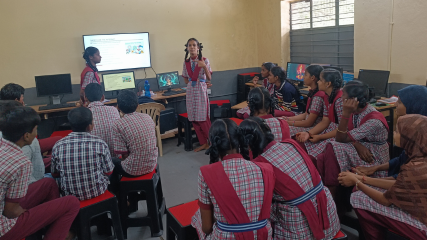
In addition to technical skills, students develop competencies in website navigation, presentation skills, analytical and logical thinking, and basic soft skills. As students progress year-on-year, the curriculum builds cumulatively, ensuring a strong digital foundation throughout high school.
Assessment & Learning Approach
Periodic assessments are conducted to evaluate student progress, identify individual strengths and learning gaps, and assess overall class-level outcomes. These insights enable educators to provide targeted support where needed.
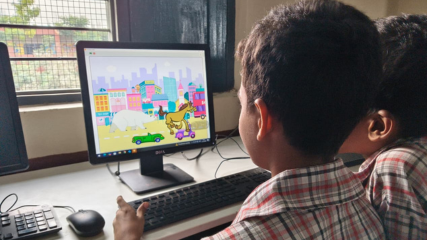
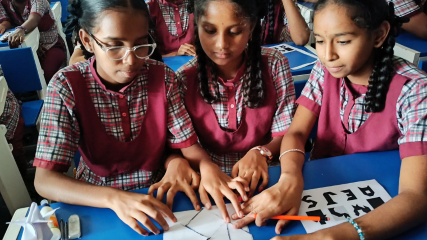
Learning is activity-based and interactive, with students engaging in games, puzzles, group work, and individual tasks that promote participation, curiosity, and enjoyment.
Infrastructure & Delivery
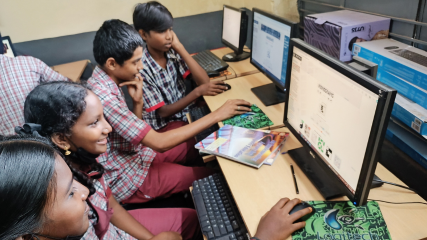
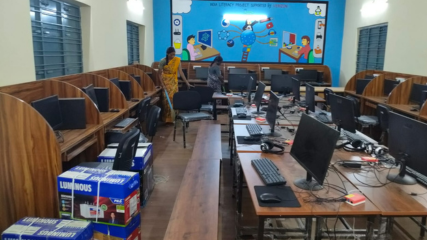
Each school is equipped with 16–23 computer systems, depending on class strength, maintaining a 1:2 student-to-computer ratio. For larger classes, students are divided into sections to ensure effective learning. All computer labs are equipped with projectors and speakers, enabling clear demonstrations and guided instruction. Hands-on learning is prioritized, with approximately 80% of the curriculum delivered through practical, computer-based activities.
Learning logical reasoning with nonograms
Certificate distribution at Mustaidpura
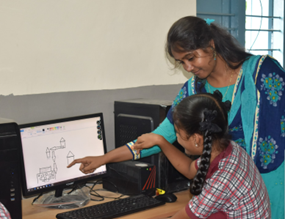
Patancheru Computer Classroom
3D Paint
Playing tangrams
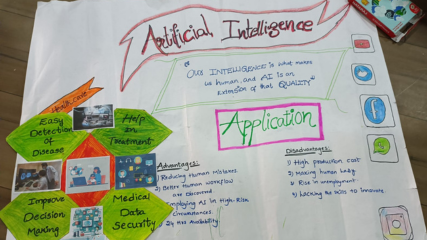
Learning the application of AI
Developing presentational skills
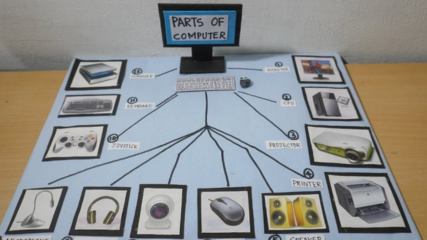
Learning the parts of a computer